
Published research
Co-authored a study on postpartum health
Published in JMIR Formative Research.
Practical thinking on AI strategy, ML product development, and building AI features that actually work.
Published research
Published in JMIR Formative Research.
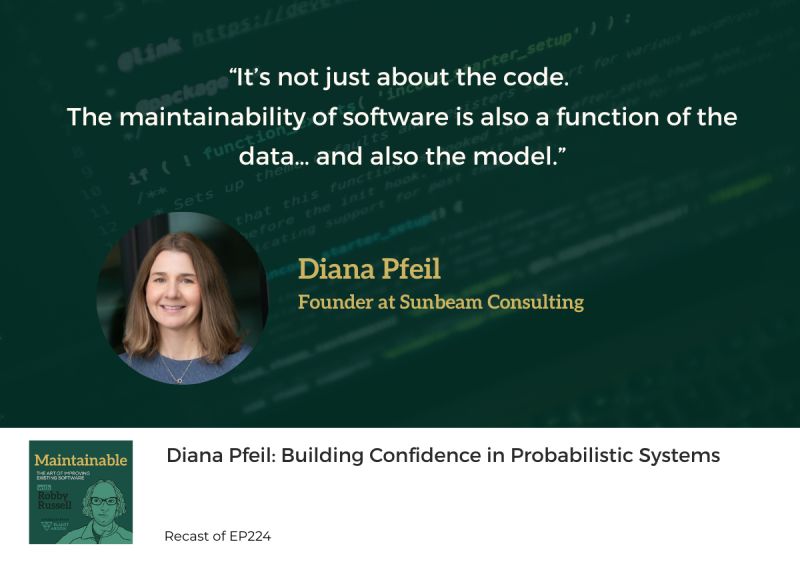
Podcast guest
I joined Robby Russell to talk about maintaining AI and ML systems.
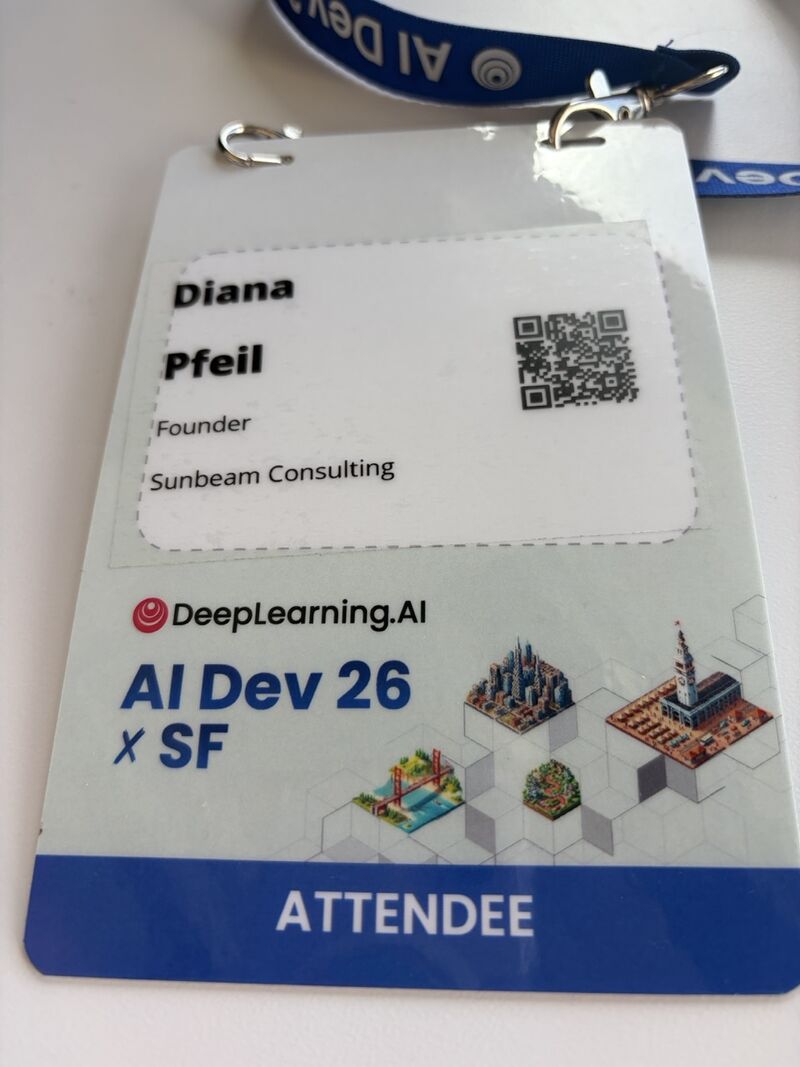
Talk & takeaways
My takeaways from the AI Dev Conference in San Francisco.
AI can handle the QA a separate team used to do. What it can't handle is domain judgement, and that belongs closer to the product.
Read more →Why eval suites built on invented examples teach you almost nothing, and what to do instead.
Read more →Why the most repeated line about data quality usually leads to premature optimization.
Read more →I joined Robby Russell to talk about what makes maintaining AI and ML systems different from traditional software.
Read more →Why I make time to work through a whole technical book with a reading group.
Read more →Published in JMIR Formative Research.
Read more →A simple exercise for leaders who feel responsible for everything: write down what you own, then go align on it with your founder.
Read more →A pattern that works well for predictive models: let LLMs extract signal from messy unstructured data, then let a model like XGBoost make the actual prediction.
Read more →My lifelong obsession with nodes and edges.
Read more →Everyone is fumbling with new AI-powered tooling. If your most senior engineers are comfortable, that's the thing to worry about.
Read more →My takeaways from the AI Dev Conference in San Francisco
Read more →How to cut through the volume of AI research: don't try to reason your way to an answer, design a small experiment that tells you whether a paper matters for your product.
Read more →My product book club and a few founders crowded into my living room for a talk with Sue Heilbronner about selling without the hard sell, limiting beliefs, and distilling your essence into 30 seconds.
Read more →Why PM-defines-problem then engineering-builds-it breaks down on genAI and ML projects, and the iteration rhythm that replaces it.
Read more →What I took away from the PRIME paper on classifying into enormous label spaces, and why its momentum-updated label centroids are the interesting part.
Read more →What I've been seeing, what I've changed my mind about, and what I'm recommending, from worktrees to Cowork to Claude's Constitution.
Read more →I let go of every one of my early hires because I couldn't deliver the feedback they needed. Here's the approach I use now.
Read more →Common red flags that lead to AI builds dragging on indefinitely or features falling flat on launch, and how to distinguish them from the expected discomfort of building probabilistic systems.
Read more →Why CTOs should carve out time to write code despite conventional wisdom, and how to do it without becoming a bottleneck.
Read more →Why creating a golden dataset of curated user questions paired with verified correct answers is a critical first step before building AI-powered applications.
Read more →Why the placement of an ML feature in the user journey matters more than model choice, using the Jobs-to-Be-Done framework to define what your model should optimize for.
Read more →Why chat interfaces aren't the future of AI UX, and how AI patterns like smart defaults, contextual suggestions, and proactive helpers create better experiences.
Read more →One of the biggest mindset shifts when building AI features: moving from design-first to data-first, where your data determines what's feasible, stable, and valuable.
Read more →How I help startup founders and tech leads bring clarity and momentum to their AI efforts, from figuring out what's worth building to shipping features users trust.
Read more →Why hand-labeling data and manually inspecting errors are some of the highest-ROI activities when building AI features, despite teams resisting the manual work.
Read more →Why standard uptime monitoring isn't enough for AI-powered features, and the minimum metrics teams should track to catch model drift and degradation.
Read more →How much data do you need to build a predictive model? The honest answer is you don't know upfront, but starting with 100-200 labeled examples is a solid approach.
Read more →Before building an AI feature, make sure someone will actually use it. Key takeaways from The Mom Test for better customer discovery.
Read more →A practical approach to using LLMs as classifiers by combining multi-criteria LLM judgments with a lightweight model like XGBoost for better accuracy and calibration.
Read more →Why there's rarely a single 'best' technical decision, and how decision records, speed, and iterative review help engineering organizations get better over time.
Read more →Five common failure modes that cause ML projects to fail, from mismatched expectations and lack of progress to inadequate data, overly-complex solutions, and lack of expertise.
Read more →Why 1-week sprints are uniquely powerful for ML and research teams, despite seeming counterintuitive for open-ended experimental work.
Read more →